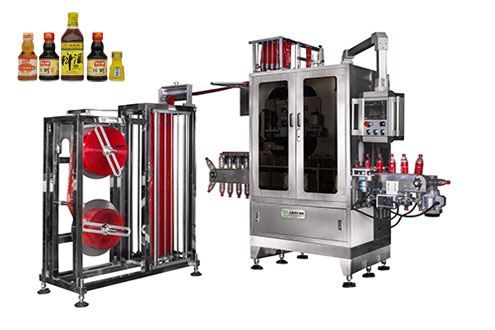
In today’s fast-moving consumer goods sector, where product launches happen in weeks rather than quarters, packaging lines must pivot instantly without sacrificing quality or efficiency. At the core of this agility is the heat shrink sleeve machine a once-static component now reimagined as a responsive, format-agnostic engine for rapid labeling deployment.
Unlike legacy systems designed for long production runs of identical containers, modern heat shrink sleeve machines prioritize modularity and digital readiness. Quick-swap guide rails, height-adjustable tunnel sections, and auto-calibrating film feeders allow operators to transition between bottle shapes, sizes, and sleeve lengths with minimal manual intervention. This capability is especially valuable for co-packers managing seasonal campaigns, regional variants, or limited-edition drops across food, beverage, and beauty segments.
What’s new in 2026 is the emphasis on “line harmony.” Rather than operating in isolation, these machines now synchronize seamlessly with upstream label applicators and downstream inspection systems via standardized industrial protocols. Real-time data exchange ensures consistent spacing, prevents jams during speed changes, and enables automatic slowdowns if misfeeds are detected keeping the entire line in rhythm.
Another shift is the move toward operator-centric design. Touchless sensors, voice-guided setup prompts, and augmented reality overlays (via mobile or smart glasses) reduce training time and human error during changeovers. This democratization of complex automation empowers smaller teams to manage high-mix workflows previously reserved for large facilities.
Material versatility remains critical. With brands experimenting with matte finishes, textured films, and compostable sleeves, the heat shrink sleeve machine must deliver uniform results across wildly different thermal behaviors. Advanced units now use adaptive airflow algorithms that adjust blower intensity based on real-time sleeve feedback ensuring tight conformality without scorching or wrinkling.
Downtime prevention has also evolved. Built-in diagnostics track motor load, belt tension, and heater performance, flagging anomalies before they cause failures. Maintenance schedules are no longer calendar-based but usage-driven, extending component life while maximizing uptime.
As the pace of commerce accelerates, the ability to relabel, rebrand, and redeploy at speed defines competitive advantage. The heat shrink sleeve machine once seen as a simple finishing step is now a linchpin of agile, resilient, and future-ready packaging operations.
Contact: Kris.Jiang
Phone: +86-13512184818
E-mail: Kris.jiang@sr-packing.com
Add: No. 18, Changting Road, Fengxian District, Shanghai, China