The condiment and sauce industry faces unique packaging challenges that go far beyond simple aesthetics. As we progress through 2026, the demand for a specialized sauce bottle labeling machine is at an all time high. Unlike standard beverage bottling, labeling sauces ranging from viscous chili pastes to oily salad dressings requires machinery that can handle difficult surfaces, irregular shapes, and strict hygiene standards without compromising speed or accuracy.
The Challenge of Viscosity and Surface Contamination
One of the primary drivers for innovation in the sauce bottle labeling machine sector is the issue of "label adhesion" on less than ideal surfaces. Sauces are prone to splashing or leaving a fine mist of oil on the bottle neck and shoulder during the filling process. Even microscopic traces of oil can cause standard labels to peel or bubble over time.
Modern machines are now being equipped with advanced bottle cleaning stations (such as ionized air blowers or brush systems) integrated directly before the labeling head. This ensures that the container is free of dust and oil residue. Furthermore, the development of high tack applicators ensures that labels are applied with sufficient pressure to bond instantly, preventing the "flagging" (lifting edges) often seen on oily plastic bottles.
Versatility in Handling Irregular Geometries
The sauce market is driven by shelf appeal, leading to a proliferation of unique bottle shapes from square glass jars for premium salsas to squeezable plastic flasks for condiments. A standard round-bottle labeler is often insufficient for these diverse formats.
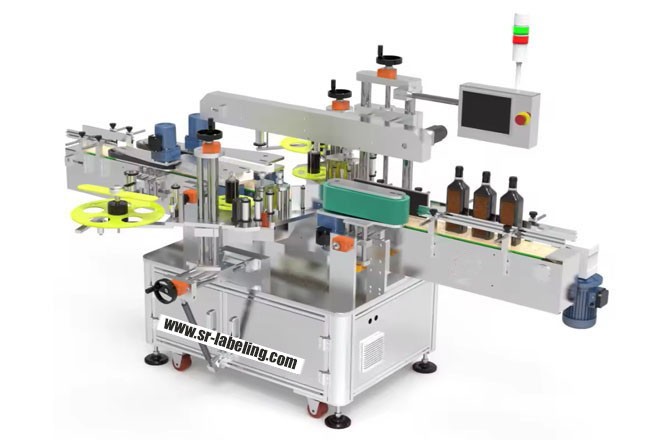
The modern sauce bottle labeling machine is defined by its versatility. We are seeing a shift toward "wrap around" labeling systems that can handle square, oval, and rectangular containers with high precision. These machines utilize sophisticated sponge belt or roller mechanisms that conform to the bottle's shape, ensuring the label wraps smoothly around corners without creasing. This flexibility allows manufacturers to switch between glass and plastic formats with minimal mechanical adjustment, a crucial feature for co packers handling multiple brands.
Integration with Hot Fill and Aseptic Lines
Many sauce products, particularly those with low acidity or natural preservatives, require hot filling processes to ensure shelf stability. This presents a thermal challenge for labeling. Applying a label to a hot bottle can cause the adhesive to liquefy and bleed, or the label itself to warp.
Advanced labeling machines are now designed to integrate seamlessly with cooling tunnels. They utilize thermal sensors to monitor bottle temperature or are constructed with heat resistant components that allow them to operate effectively in the high temperature environments typical of ketchup and paste production lines. This ensures that the labeling process does not become a bottleneck in the thermal processing chain.
Strategic Considerations for Production Lines
For producers looking to upgrade their packaging capabilities, the selection of a sauce bottle labeling machine requires a focus on hygiene and adaptability:
Hygienic Design: Look for machines constructed with 304 or 316 stainless steel and IP65 rated electronics. This allows for washdowns with high-pressure water, which is essential for maintaining food safety standards in sticky environments.
Vision Inspection Systems: To prevent costly recalls, modern lines are integrating vision systems that check for label presence, position, and even barcode verification immediately after application.
Servo Driven Precision: Unlike older friction driven systems, servo motor driven labelers offer precise control over the label feed, reducing waste and ensuring that every jar of premium sauce looks perfect.
Contact: Kris.Jiang
Phone: +86-13512184818
E-mail: Kris.jiang@sr-packing.com
Add: No. 18, Changting Road, Fengxian District, Shanghai, China