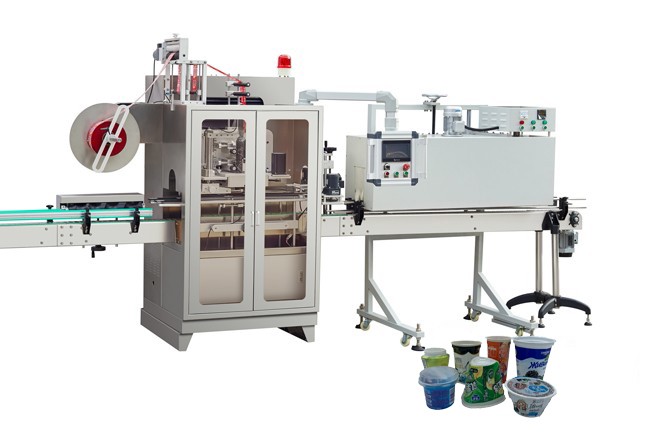
In modern packaging automation, sleeve applicator systems are designed to deliver precise and consistent label placement across a wide range of container types. Despite advancements in automation and control technology, misalignment issues still occur in some production environments. These inconsistencies can affect packaging appearance, production efficiency, and downstream processing stability.
Understanding the root causes of misalignment is essential for improving operational reliability in high-speed packaging lines.
Variations in Container Movement During Operation
One of the most common factors contributing to sleeve applicator misalignment is inconsistent container movement. In automated lines, bottles or containers are transported through conveyors at high speed, and even slight variations in spacing or positioning can affect labeling accuracy.
If containers are not properly stabilized before reaching the applicator, sleeve placement may shift slightly, resulting in uneven positioning after the shrinking stage. Maintaining controlled and steady movement is critical for achieving accurate labeling results.
Timing Differences Between System Components
Automated packaging lines rely on precise timing between multiple machines. When the sleeve applicator is not fully synchronized with upstream or downstream equipment, small timing differences can lead to positioning errors.
Even minimal delays in product detection, sleeve feeding, or container transfer can accumulate and result in visible misalignment. Proper synchronization is essential to ensure that each container receives the sleeve at the correct moment in the cycle.
Mechanical Wear and Long-Term Operation Factors
Over time, mechanical components involved in sleeve feeding and positioning may experience gradual wear. This can affect alignment accuracy during continuous production.
Rollers, guides, and transport mechanisms must maintain stable performance to ensure that sleeves are consistently applied in the correct position. Without proper maintenance and calibration, small deviations can gradually impact overall system accuracy.
Influence of Container Shape and Surface Design
Modern packaging designs often include complex bottle shapes such as tapered bodies, curved surfaces, or irregular contours. These variations can introduce additional challenges for sleeve alignment.
If the applicator system is not properly adjusted for specific container geometries, sleeves may shift during placement or fail to align correctly before shrinking. Adaptation to different packaging formats is an important factor in maintaining consistent performance.
Material Behavior During Sleeve Application
Sleeve materials are flexible by nature and can respond differently under varying environmental and mechanical conditions. Factors such as tension, feeding speed, and material elasticity can influence positioning accuracy.
If material tension is not evenly controlled, sleeves may stretch or shift slightly before reaching the application point. This can result in misalignment that becomes more visible after heat shrinking.
Sensor Accuracy and Detection Sensitivity
Automated sleeve applicator systems rely on sensors to detect container position and trigger precise application timing. Any reduction in sensor accuracy can directly affect alignment results.
Dust accumulation, calibration drift, or signal inconsistency may cause incorrect positioning signals, leading to misplacement of sleeves on containers. Regular system verification helps reduce this type of error.
Conveyor Stability and System Vibration
Excessive vibration or instability in conveyor systems can also contribute to misalignment issues. When containers are not held firmly during transport, slight movement can occur during sleeve placement.
This instability becomes more noticeable at higher production speeds, where even minor vibrations can affect application precision. A stable mechanical environment is essential for maintaining accurate labeling performance.
Operator Adjustment and System Configuration
Although modern systems are highly automated, initial setup and parameter configuration still play a role in final performance. Incorrect alignment settings or improper calibration can lead to persistent labeling deviations.
Ensuring that system parameters are correctly adjusted for each production setup helps reduce misalignment risks and improves overall consistency.
Improving Alignment Consistency in Production Lines
Reducing misalignment requires a combination of mechanical stability, system synchronization, and proper material handling. Regular inspection, timely maintenance, and optimized system configuration all contribute to improved performance.
Contact: Kris.Jiang
Phone: +86-13512184818
E-mail: Kris.jiang@sr-packing.com
Add: No. 18, Changting Road, Fengxian District, Shanghai, China