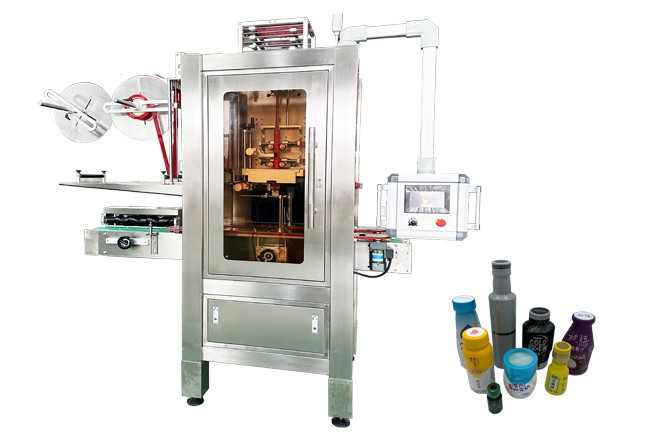
In modern packaging automation lines, sleeving machine for bottles systems are widely used to apply shrink sleeve labels with high speed and precision. These machines play a key role in ensuring consistent packaging quality across industries such as beverages, personal care, and household products. However, despite advanced automation, several operational issues can still occur during continuous production.
Understanding these common issues helps improve machine stability, reduce downtime, and maintain consistent labeling performance.
Irregular Bottle Feeding and Conveyor Instability
One of the most frequent operational issues is inconsistent bottle feeding. When bottles are not evenly spaced or smoothly transported, the sleeving process becomes unstable.
This irregular movement can lead to misaligned sleeves, missed applications, or timing disruptions between bottle detection and sleeve placement. Stable conveyor control is essential for maintaining smooth system operation.
Timing Errors in Sleeve Application
Sleeving machines rely heavily on precise timing between bottle detection and sleeve release. If timing synchronization is disrupted, sleeves may be applied too early or too late.
Even small timing errors can result in visible misalignment after the shrink process. Maintaining accurate synchronization across all system components is essential for consistent output.
Sensor Malfunction or Detection Delay
Sensors are responsible for detecting bottle position and triggering sleeve application. If sensors become contaminated, misaligned, or improperly calibrated, detection accuracy may decline.
This can lead to incorrect triggering signals, resulting in inconsistent sleeve placement. Regular sensor maintenance is necessary to avoid operational interruptions.
Material Feeding and Tension Instability
Shrink sleeve materials require controlled feeding to ensure smooth application. If material tension fluctuates, sleeves may stretch, wrinkle, or shift during positioning.
This instability can directly affect labeling accuracy and reduce overall packaging quality. Proper tension control systems help stabilize material delivery.
Mechanical Wear and Component Degradation
Over time, mechanical parts such as rollers, guide rails, and cutting units may experience wear. This natural degradation can reduce positioning accuracy and operational stability.
Worn components may cause inconsistent bottle handling or uneven sleeve application. Preventive maintenance is important to ensure long-term system reliability.
Conveyor Vibration and System Movement
Excessive vibration in the conveyor system or surrounding equipment can negatively affect sleeving accuracy. Bottles may shift slightly during application, leading to misaligned labels.
This issue becomes more noticeable at higher production speeds, where system sensitivity increases. A stable mechanical structure helps minimize vibration impact.
Speed-Related Performance Limitations
Operating the sleeving machine beyond its optimal speed range can introduce instability. High-speed conditions reduce the system’s tolerance for timing and positioning errors.
When speed increases without proper synchronization adjustments, labeling accuracy may decline. Balancing speed and precision is essential for stable production.
Environmental Influences on Machine Performance
Environmental conditions such as temperature, humidity, and airflow can also affect system stability. These factors may influence both mechanical behavior and sleeve material performance.
Unstable environmental conditions can increase the likelihood of feeding or alignment issues during operation.
Electrical and Control System Fluctuations
Inconsistent control signals or electrical instability can disrupt normal machine operation. This may result in delayed responses or irregular application cycles.
Stable control systems are necessary to ensure accurate communication between sensors, actuators, and mechanical components.
Improving Operational Stability
Addressing operational issues in sleeving machine for bottles systems requires a combination of preventive maintenance, proper system calibration, and stable production conditions. Each component must operate in synchronization to maintain consistent performance.
Regular inspection and system optimization help reduce downtime and improve overall packaging efficiency.
Contact: Kris.Jiang
Phone: +86-13512184818
E-mail: Kris.jiang@sr-packing.com
Add: No. 18, Changting Road, Fengxian District, Shanghai, China