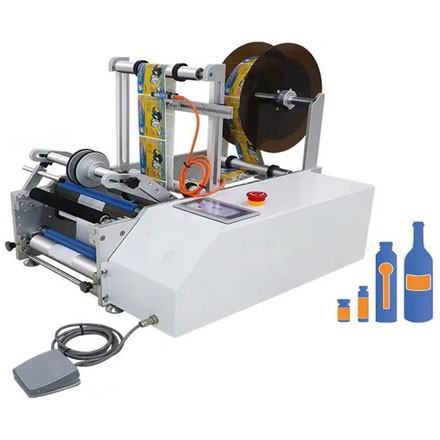
As global manufacturing becomes increasingly data-driven, bottle producers are looking beyond basic packaging functions and focusing on technologies that improve efficiency, traceability, and operational control. Among the solutions gaining widespread adoption, automated label applicator machines are playing an important role in transforming bottle production processes across multiple industries.
From beverages and personal care products to household chemicals and specialty liquids, accurate labeling has become a critical component of modern packaging operations.
The Growing Importance of Product Identification
In today's competitive markets, labels serve more than a branding purpose. They provide essential information related to product specifications, batch identification, compliance requirements, and supply chain management.
As product portfolios expand and regulatory expectations evolve, manufacturers require labeling systems capable of maintaining accuracy throughout high-volume production environments. Automated label applicator machines help ensure consistent label placement while supporting reliable product identification across thousands of units per production cycle.
This capability contributes to improved operational control and enhanced customer confidence.
Supporting Faster Production Turnarounds
Consumer demand is becoming increasingly dynamic, requiring manufacturers to respond quickly to changing market conditions. Product launches, seasonal packaging updates, and promotional campaigns often place additional pressure on production schedules.
Automated labeling solutions help manufacturers improve responsiveness by reducing manual intervention and accelerating packaging workflows. Faster label application speeds enable production facilities to process larger volumes while maintaining consistent quality standards.
As production cycles continue to shorten, automation becomes a valuable tool for maintaining competitiveness.
Enhancing Supply Chain Visibility
Global supply chains are becoming more complex, creating greater demand for accurate product tracking and inventory management. Labels frequently contain information that supports warehouse operations, distribution activities, and retail logistics.
Automated label applicator machines contribute to supply chain visibility by applying labels with greater consistency and readability. Clear identification supports efficient scanning, inventory control, and shipment verification throughout the product journey.
As traceability requirements continue to expand, reliable labeling technologies are becoming increasingly important.
Adapting to Diverse Packaging Formats
Bottle manufacturers now produce an extensive variety of container shapes, materials, and sizes. Packaging diversity helps brands differentiate products, but it also introduces new challenges for labeling operations.
Modern automated label applicator systems are designed to handle varying bottle configurations while maintaining accurate placement performance. This flexibility enables manufacturers to support multiple product lines without sacrificing operational efficiency.
The ability to accommodate diverse packaging formats has become an essential feature in today's manufacturing environment.
Data Integration and Smart Production
The rise of Industry 4.0 is reshaping production facilities worldwide. Packaging equipment is increasingly expected to communicate with production management systems, quality control platforms, and operational monitoring tools.
Automated label applicator machines can contribute valuable production data that supports performance analysis and process optimization. Real-time monitoring capabilities help manufacturers identify trends, improve workflow efficiency, and make informed operational decisions.
This integration supports broader digital transformation initiatives throughout manufacturing facilities.
Reducing Packaging Errors
Labeling errors can result in product returns, inventory discrepancies, and disruptions throughout the distribution process. Even minor inconsistencies may create challenges for logistics operations and customer satisfaction.
By automating label application, manufacturers can improve consistency and reduce the likelihood of human error. Reliable labeling performance contributes to smoother production workflows and more efficient downstream operations.
As quality expectations continue to rise, error reduction remains a major priority for packaging professionals.
Contact: Kris.Jiang
Phone: +86-13512184818
E-mail: Kris.jiang@sr-packing.com
Add: No. 18, Changting Road, Fengxian District, Shanghai, China