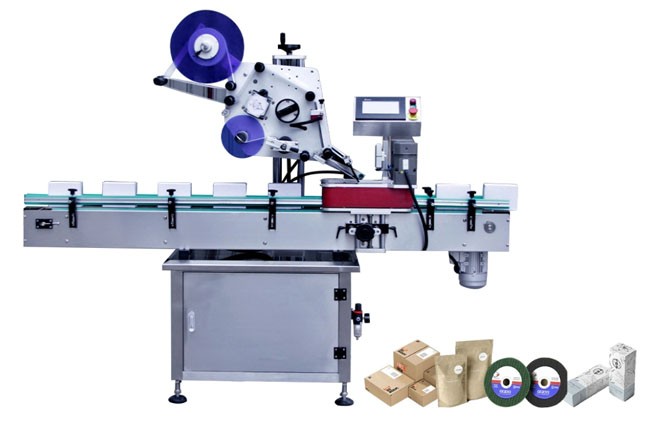
In recent years, flexible packaging has become one of the fastest-growing segments in the global packaging industry. Products such as food pouches, liquid sachets, pharmaceutical packets, and household refills are increasingly packaged in lightweight, space-efficient formats. As this trend expands, pouch labeling machines have become an essential part of automated packaging lines, ensuring accurate labeling and consistent product presentation.
Unlike traditional rigid container labeling, pouch packaging presents unique challenges due to its flexible structure and variable surface conditions. This has driven the need for more specialized labeling solutions designed specifically for non-rigid packaging materials.
Addressing the Challenges of Flexible Packaging Surfaces
One of the main difficulties in labeling pouches is maintaining stability during the application process. Unlike bottles or cans, pouches can shift, bend, or deform as they move along the production line. This makes precise label placement more complex.
Pouch labeling machines are designed to stabilize the packaging during operation, ensuring that each label is applied in the correct position. Controlled handling mechanisms help reduce movement and improve accuracy, even when dealing with lightweight or partially filled pouches.
This stability is essential for maintaining consistent packaging quality in high-speed production environments.
Ensuring Accurate Label Placement on Soft Materials
Flexible packaging materials often react differently to pressure compared to rigid containers. If labeling is not properly controlled, it can result in misalignment, wrinkles, or uneven adhesion.
Modern pouch labeling systems use synchronized feeding and positioning mechanisms to ensure that labels are applied smoothly across the pouch surface. This helps maintain visual clarity and improves the overall appearance of the final packaged product.
Accurate labeling plays an important role in product identification and consumer trust.
Supporting High-Speed Automated Production Lines
As demand for pouch-packaged products continues to rise, manufacturers are increasingly relying on high-speed automated production systems. Pouch labeling machines are designed to integrate into these environments without disrupting workflow efficiency.
By maintaining consistent labeling speed and coordination with upstream and downstream equipment, these systems help ensure continuous production flow. This reduces downtime and improves overall operational efficiency.
Efficiency in labeling is a key factor in large-scale flexible packaging operations.
Adaptability for Different Pouch Types
Pouches come in many different formats, including stand-up pouches, flat sachets, resealable bags, and spouted packaging. Each type presents unique labeling requirements based on shape, size, and material composition.
A well-designed pouch labeling machine must be able to adapt to these variations without requiring extensive manual adjustments. This flexibility allows manufacturers to handle multiple product lines on the same production system.
Adaptability supports product diversification and faster market response.
Improving Packaging Consistency and Brand Presentation
In competitive retail environments, packaging appearance directly influences consumer perception. Consistent label placement helps strengthen brand identity and ensures that products maintain a professional and uniform look across all production batches.
Pouch labeling machines help achieve this consistency by standardizing the application process. This reduces variation between units and enhances overall product presentation.
Strong visual consistency is a key factor in brand recognition.
Enhancing Integration with Modern Packaging Systems
Modern production facilities rely on integrated systems where labeling, filling, sealing, and inspection processes work together seamlessly. Pouch labeling machine are designed to function as part of these interconnected systems.
This integration improves workflow synchronization and helps maintain stable production output. It also supports better process monitoring and control across the entire packaging line.
System integration is increasingly important in automated manufacturing environments.
Supporting the Growth of Flexible Packaging Markets
The global shift toward lightweight, sustainable, and cost-efficient packaging has significantly increased the demand for pouch-based solutions. As a result, labeling technology must continue to evolve to meet new production requirements.
Pouch labeling machines play a critical role in supporting this transition by enabling efficient, accurate, and scalable labeling processes for flexible packaging formats.
Contact: Kris.Jiang
Phone: +86-13512184818
E-mail: Kris.jiang@sr-packing.com
Add: No. 18, Changting Road, Fengxian District, Shanghai, China