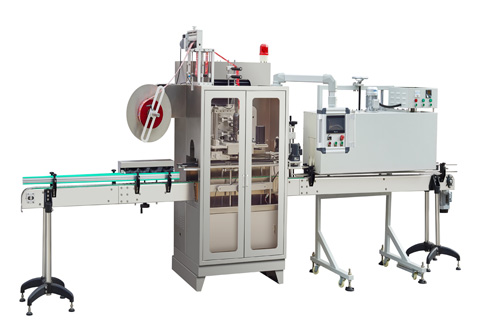
In the complex calculus of modern manufacturing, the acquisition of packaging machinery is a significant capital expenditure that must be justified by tangible returns. Sleeve labeling equipment, once viewed primarily as a tool for aesthetic enhancement, has emerged as a critical driver of operational efficiency and long-term profitability. For plant managers and procurement executives, understanding the economic implications of this technology is essential for optimizing production lines and securing a competitive advantage in high-volume markets.
Maximizing Throughput and Minimizing Labor Costs
The most immediate economic benefit of modern sleeve labeling equipment is its ability to drastically increase production throughput while reducing reliance on manual labor. Automated systems are engineered to process hundreds of containers per minute with consistent precision, far outpacing the capabilities of semi-automatic or manual alternatives. By automating the feeding, cutting, and application processes, manufacturers can reallocate human resources to higher-value tasks such as quality oversight and line supervision. This reduction in labor dependency not only lowers ongoing operational costs but also mitigates the risks associated with workforce shortages and human error.
Reducing Material Waste Through Precision Engineering
In an industry where profit margins are often dictated by material costs, minimizing waste is a primary financial imperative. Advanced sleeve labeling equipment utilizes high-resolution sensors and servo-driven cutting mechanisms to ensure that every inch of film is utilized efficiently. Precise registration controls prevent costly misalignments and skewed applications that typically result in rejected products and wasted material. Furthermore, modern machines are capable of handling thinner, more cost-effective films without compromising application quality, allowing manufacturers to achieve significant savings on raw material expenditures over the course of high-volume production runs.
Enhancing Supply Chain Resilience Through Versatility
Economic resilience in manufacturing is often tied to operational flexibility. Modern sleeve labeling equipment is designed to handle a diverse range of container geometries and label types, from full-body shrink sleeves to partial tamper-evident bands. This versatility allows manufacturers to consolidate multiple packaging lines into a single, adaptable system. By reducing the need for specialized, single-purpose machinery, businesses can lower their overall capital expenditure and maintenance overheads. Additionally, the ability to quickly pivot between different product formats ensures that production lines remain agile and responsive to shifting supply chain demands.
Long-Term Value Through Durability and Scalability
When evaluating the economic impact of sleeve labeling equipment, the total cost of ownership must extend beyond the initial purchase price. High-quality systems are built with robust industrial-grade components designed to withstand the rigors of continuous, high-speed operation. This durability translates to extended equipment lifespans and reduced frequency of costly repairs or replacements. Moreover, modular designs allow for future upgrades and scalability, ensuring that the machinery can grow alongside the business. By investing in durable, scalable equipment, manufacturers secure a stable, cost-effective foundation for long-term operational success.
Contact: Kris.Jiang
Phone: +86-13512184818
E-mail: Kris.jiang@sr-packing.com
Add: No. 18, Changting Road, Fengxian District, Shanghai, China