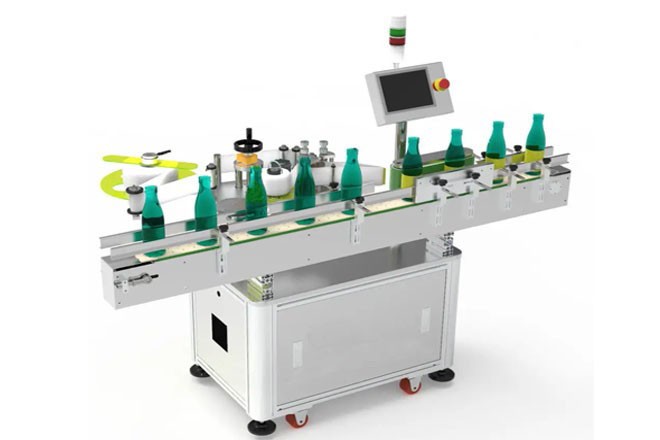
In the modern beverage manufacturing sector, isolated equipment is rapidly becoming a relic of the past. The true measure of operational excellence lies in how seamlessly individual stations communicate and function as a unified ecosystem. When a water bottle labeling machine is fully connected to an integrated production line, it transcends its role as a mere application station, transforming into a synchronized node that drives overall equipment effectiveness (OEE) and maximizes throughput.
Intelligent Conveyor Synchronization
The physical connection between upstream filling stations and downstream packaging modules requires precise mechanical and electronic coordination. Advanced labeling machines are equipped with smart conveyor systems featuring variable frequency drives that continuously communicate with adjacent equipment. If a downstream packing or palletizing station experiences a temporary micro stoppage, the labeling machine’s PLC instantly detects the backlog and adjusts its feed rate accordingly. This dynamic buffering prevents container collisions, eliminates unnecessary wear on guide rails, and ensures a smooth, uninterrupted flow of products through the facility without requiring manual operator intervention.
Centralized Data Exchange via MES Integration
A truly connected labeling machine acts as a vital data source for the factory’s Manufacturing Execution System (MES). Through standard industrial communication protocols, the applicator transmits real time telemetry regarding production counts, downtime events, and material consumption directly to the central control room. This digital integration allows plant managers to monitor the exact health of the labeling station from a centralized dashboard. Furthermore, recipe management becomes highly automated; when a new SKU is scheduled on the line, parameters such as web tension, cutting length, and conveyor speed can be pushed digitally to the labeling machine, drastically reducing setup times and human error.
Automated Quality Feedback Loops
Connecting the labeling machine to the broader production environment enables sophisticated quality assurance mechanisms. Modern lines often integrate vision inspection systems immediately following the labeling station. If the camera detects misaligned labels, missing prints, or defective sleeves, this information is instantly fed back to the labeling machine’s control system. The software can automatically adjust the registration sensors to correct minor drifts before they escalate into widespread defects. In cases of severe anomalies, the system can trigger automatic rejection gates downstream, ensuring that only perfectly labeled bottles proceed to the secondary packaging stage.
Streamlined Material Handling and Replenishment
Physical connectivity also extends to material logistics. On high speed lines, frequent roll changes can become a bottleneck. Connected labeling machines are increasingly designed with automated splice tables and dual unwind stations that allow operators to prepare a new label roll while the machine continues running at full cadence. When spliced, the transition occurs seamlessly without stopping the line. Additionally, these systems can alert warehouse personnel when label inventory reaches critical thresholds, integrating the packaging floor with the broader supply chain management process to prevent unexpected stockouts during peak production runs.
Contact: Kris.Jiang
Phone: +86-13512184818
E-mail: Kris.jiang@sr-packing.com
Add: No. 18, Changting Road, Fengxian District, Shanghai, China