In the dynamic landscape of modern packaging, the semi-automatic label applicator occupies a unique and highly valuable niche. While fully automated lines dominate high-volume mass production, semi-automatic machines offer a distinct set of application characteristics that make them indispensable for small-to-medium enterprises, artisanal producers, and high-mix manufacturing environments. Understanding these specific operational traits is key to maximizing their potential.
Human-Machine Synchronization and Ergonomic Control
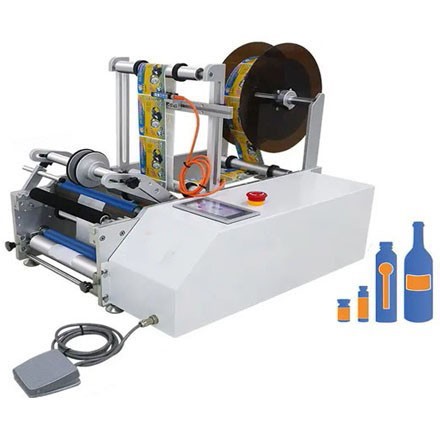
A defining application characteristic of the semi-automatic label applicator is the seamless integration of human input with mechanical precision. Unlike fully automated systems that operate on continuous conveyor belts, semi-automatic machines rely on operator-triggered cycles. This is typically achieved through ergonomic foot pedals or dual-hand safety buttons. This characteristic allows the operator to control the pacing of the labeling process, ensuring that each product is perfectly positioned before the label is applied. It bridges the gap between the consistency of automation and the adaptability of human dexterity.
Uncompromising Precision for Flat and Cylindrical Surfaces
Despite their smaller footprint, semi-automatic applicators are engineered to deliver professional-grade accuracy. Utilizing advanced photoelectric sensors and stepper or servo motors, these machines ensure that labels are applied with millimeter-level precision (often within ±0.5mm to ±1mm). They are highly effective across diverse geometries, from flat surfaces like cosmetic boxes and pharmaceutical cartons to cylindrical or tapered containers like glass bottles and jars. The mechanical application mechanisms, such as tamp pads, wipe-on rollers, or air-blow systems, ensure that labels are applied smoothly, eliminating the air bubbles, wrinkles, and misalignments common in manual labeling.
Rapid Changeover and High-Mix Flexibility
One of the most significant operational characteristics of semi-automatic label applicators is their exceptional agility. In production environments where SKU changes occur frequently, downtime is the enemy of profitability. Semi-automatic machines are designed with modular components, quick-release mechanisms, and intuitive digital interfaces. Operators can often transition between different container sizes or label dimensions in a matter of minutes. This rapid changeover capability makes them the ideal solution for businesses running short batches, seasonal promotions, or personalized product lines.
Compact Footprint and Scalable Integration
Semi-automatic label applicators are characterized by their space-efficient, benchtop-friendly designs. Weighing typically under 80kg and occupying less than a square meter of floor space, they can be easily integrated into existing workstations, mobile packaging carts, or tight production cells. Furthermore, they serve as a perfect stepping stone for growing businesses. As production volumes increase, the operational workflows and quality standards established on a semi-automatic applicator can be seamlessly scaled up to fully automated systems, protecting the initial capital investment.
Cost-Efficient Professionalization
Finally, the economic application characteristic of this equipment cannot be overstated. Semi-automatic label applicators provide a highly accessible entry point into mechanized packaging. They require a fraction of the capital expenditure of fully automatic lines and have significantly lower maintenance costs. By automating the most tedious and inconsistent part of the packaging process, they allow small businesses to elevate their brand presentation, reduce material waste, and improve overall throughput without overextending their operational budgets.
Contact: Kris.Jiang
Phone: +86-13512184818
E-mail: Kris.jiang@sr-packing.com
Add: No. 18, Changting Road, Fengxian District, Shanghai, China