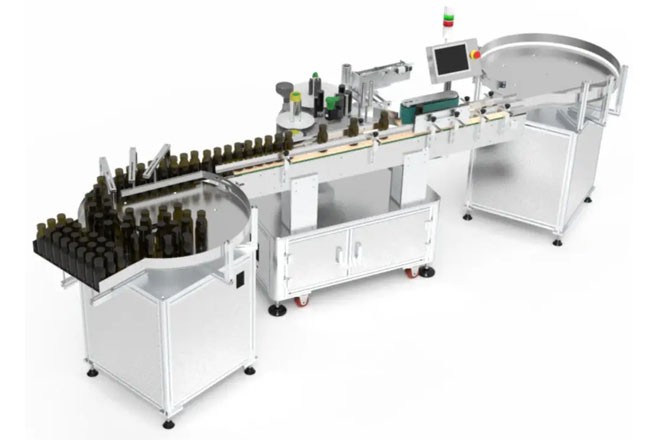
In the fast-paced world of manufacturing and logistics, the transition from manual labor to automated precision is a defining milestone. At the forefront of this industrial evolution is the automatic labeling machine. Far more than a simple tool for applying stickers, it is a sophisticated electromechanical system designed to accurately, rapidly, and consistently affix labels to products or packaging. For modern enterprises, understanding the mechanics and strategic value of this equipment is essential for optimizing supply chain operations.
The Core Working Principle: Precision and Synchronization
At its heart, an automatic labeling machine operates on a highly synchronized workflow. The process typically begins with a product entering the machine via a conveyor belt or a designated feeding mechanism. As the product reaches the labeling station, an optical or capacitive sensor detects its position and triggers the labeling head.
Simultaneously, the machine's drive system pulls a continuous roll of pressure-sensitive labels. The labels pass over a specialized stripping plate; due to the rigidity of the label face stock and the sharp change in direction, the label separates from its backing paper (liner). A synchronized mechanism, such as a tamp pad, a wipe-on roller, or a burst of compressed air, then instantly applies the label to the product's surface. This entire cycle is governed by a central control system (often a PLC) that ensures the label is placed with millimeter-level accuracy, eliminating the wrinkles, bubbles, and misalignments common in manual application.
Key Features of Advanced Labeling Systems
Modern automatic labeling machines are defined by their adaptability and intelligent engineering. Key features include:
Versatile Application Methods: Depending on the product's fragility and shape, machines can utilize different application techniques. "Wipe-on" systems use rollers for flat surfaces, "tamp-blow" systems use pneumatic rams for recessed areas, and "air-blow" systems use precise bursts of air for delicate or irregularly shaped containers.
Smart Sensor Technology: Advanced photoelectric sensors can detect transparent labels, read barcodes for print-and-apply verification, and ensure precise registration marks are met before every application.
Seamless Line Integration: These machines are designed to communicate with upstream and downstream equipment, adjusting their speed dynamically to match the overall production line's pace.
User-Friendly Interfaces: Modern units feature intuitive touchscreen HMIs (Human-Machine Interfaces) that allow operators to save specific parameters for different products, enabling rapid changeovers and minimizing downtime.
Broad Industrial Applications
The versatility of automatic labeling machines makes them indispensable across a wide spectrum of industries. In the food and beverage sector, they apply nutritional information, barcodes, and branding to bottles, cans, and cartons at blistering speeds. The pharmaceutical industry relies on these machines for precise, compliant labeling of vials and boxes, ensuring critical batch codes and expiration dates are flawlessly applied. Furthermore, in the e-commerce and logistics sectors, automatic print-and-apply labelers are revolutionizing fulfillment centers by printing and sticking shipping labels onto parcels in real-time, drastically accelerating the dispatch process.
By replacing inconsistent manual labor with high-speed, programmable automation, the automatic labeling machine stands as a critical pillar of modern manufacturing, ensuring that products are not only efficiently processed but also perfectly presented for the global market.
Contact: Kris.Jiang
Phone: +86-13512184818
E-mail: Kris.jiang@sr-packing.com
Add: No. 18, Changting Road, Fengxian District, Shanghai, China